Tuesday, October 21, 2008

Keeping Your Pet Safe This Halloween


  • All but the most social dogs and cats should be kept in a separate room during peak trick-or-treat visiting hours. Too many strangers in unusual garb can be scary and stressful for pets.

  • When opening the door for trick-or-treaters, take care that Max or Mittens doesn't dart outside. Make sure all your pets are wearing current identification, just in case.

  • No sweets for the sweet: Keep all Halloween candy out of your pet's reach. Chocolate can be poisonous to animals, and tinfoil and cellophane candy wrappers can be hazardous if swallowed.


  • It's not a bright idea to keep lit pumpkins around companion animals. Pets can knock them over, and curious kittens in particular run the risk of being burned.

  • Don't leave your pet in the yard on Halloween. There have been reports of vicious pranksters who have teased, injured, stolen and even killed pets on this night.

  • Although the ASPCA recommends that cats remain indoors at all times, it is especially important to keep your feline inside for several days before and after Halloween. Black cats in particular may be at risk from children's pranks or other cruelty-related incidents. As a safety precaution, many shelters will not adopt out black cats around Halloween.

  • Don't dress up your dog or cat unless you know she loves it. If
    you decide to do so, make sure the costume isn't annoying or
    unsafe, and doesn't restrict her movement, vision, hearing or
    ability to breathe or bark. Avoid costumes with small or
    dangling accessories that she could chew off and possibly choke
    on. And please supervise pets in costume at ALL times.

  • Visit The ASPCA For More!


Thursday, September 04, 2008

Toy Ball Posses A Danger To Your Dog!


It broke our hearts that such a horrible thing happened to Chai and cannot imagine the pain he went through. Our prayers and love are with him. Thank God that Chai has a wonderful and loving papa. "On Sunday, June 22, 2008 my 10-year old lab mix, Chai, sustained a severe injury from a product that the company Four Paws Inc, produces. The toy I'm referencing is the pimple ball with bell. (Item #20227-001, UPC Code 0 4566320227 9)" Please visit Choi's blog for more information and how you could help get this toy off the market before it hurts another dog...Choi's Blog

Monday, August 25, 2008

ASPCA's founder Henry Bergh!


The ASPCA will celebrate the birth of the ASPCA's founder Henry Bergh! on Friday, August 29. "Regarding Henry": A "Bergh's-eye" view of 140 years at the ASPCA

"New York City, April 1866: The driver of a cart laden with coal is whipping his horse. Passersby on the New York City street stop to gawk not so much at the weak, emaciated equine, but at the tall man, elegant in top hat and spats, who is explaining to the driver that it is now against the law to beat one's animal. Thus, America first encounters The Great Meddler". Read the rest of the story at ASPCA.org

Monday, August 11, 2008

Maxxamillion's Dog House Social network


Today Maxxamillion has opened the dog house to all pets. Maxxamillion's Dog House Social network is opened to all pets. Create your pets profile in minutes share your pet story's. You could add photos, videos, music and communicate with other pet owners in our community. Join or start a discussion in the Pet Forum or Join one or several pet groups. Free to join! Register today to get started!

Thursday, July 31, 2008

Are Golden Retrievers The Best Choice?


Part of Maxxamillion's breed is Golden Retriever. Golden Retrievers simply develop a strong attraction to their owners. They are a preferred dog breed, making great pets, hunting dogs, obedience competitors, show dogs, and even a combination of all these traits. No matter what your intent may be to own a Golden Retriever, you’ll have an excellent dog that will live up to it’s potential and then some.

Golden Retrievers are calm, well mannered, and extremely affectionate. They are easy to train as well, very intelligent, and great for those who need a companion. Goldens are also loyal to their owners, lovable, and great with children of all ages. They also make great watchdogs as well, as they will bark loud and let you know when a stranger is near.

Like other dogs, Golden Retrievers will shed their hair throughout the year and more in the spring - no matter how many times you brush them a day. They also like to be in and near the water, similar to Labs. If you have any type of water on or near your property, your Golden Retriever will be in it, and tend to be either wet or muddy quite a bit - which can tend to get frustrating.

If you are always on the go or never at home, you shouldn’t get a Golden Retriever. If you prefer cats over dogs, you should look into another breed. Golden Retrievers crave attention and admiration, and normally don’t do too well if you leave them at home by themselves for long periods of time. Golden’s need attention, and desire to be around you at all times. If you spend a lot of time at home on the other hand, or have kids, a Golden Retriever will be a perfect addition to your family.

A lot of people out there prefer to get a puppy and raise it themselves. This way, the puppy will grow up with the skills they have taught him. This is a great idea and very rewarding, although it can consume a lot of your time and tend to be very frustrating at times. Those who don’t have a lot of time to spare or tend to get easily frustrated, shouldn’t get a puppy. Instead, they should look towards adopting an older Golden Retriever who has already been house broken and trained.
Your local animal shelter is a great start for an older or young Golden Retriever.

Golden Retrievers are an excellent breed, and they can provide you with the companionship you have been looking for. They can participate in several activities with you as well, such as hiking, camping, and walking. Goldens love the outdoors, and they love just getting out there and doing things with you and your family. If you include your Golden Retriever in family activities - you’ll have a friend for life who will quickly grow on you over the years. They become part of the family.

Tuesday, April 22, 2008

PawMaster At Work!


Maxxamillion Having so fun at home pawing his website CoolestDogOnThePlanet.net on his lappy!

Wednesday, April 16, 2008

Maxxamillion's Toyz


Simply Fido Organic Dog Toys Bone Collection 8" Plush Bone
Simply Fido Organic Dog Toys Bone Collection 8
Simply Fido Organic Pet Toys are made of organic fabrics and all-natural dyes. Organically grown, the fibers in each toy are unbleached, untreated, and unprocessed. Natural extracts from plants and minerals, such as gardenia seed, clove and chestnut bur, are used to dye the fibers. Toys are 100% environmentally friendly!
Early March and Maxxamillion is outside enjoying the weather. We have had a very long winter here in Chicago. Early spring and winter are Maxxamillion's favorite time of the year.

Wednesday, January 30, 2008


When Putting Down Your Dog Is Not An Option!

Two years ago our dog Maxx of ten years got very ill just after he had fully recovered from a surgery that removed a cancerous tumor. Our vet told us that this was it and that it was only a matter of time that our boy would pass away, there is nothing I could do for him, we were told. Well we were absolutely not going to give up on our loving companion of ten years so easily. My feeling was that this vet had an agenda with us because of a complaint I had recently expressed about one of his employees that hurt Maxx by incorrectly trying to lift him.

Shortly thereafter disappointed and heart broken we took our boy home, we putting him down was not an option. He is family and we would not give up on him so easily, especially when we could see so much life and love in his sparkling eyes. My huband and I started researching on the internet for alternative medicine for dogs.

Fortunately, we found medicinal options that we felt would safely help Maxx get started on his way to getting well again. Many of these medicines we read about were holistic and although we live in a big metropolitan area, some were not locally available. However, we were fortunate to find that some of the holistic medicines we needed for Maxx were sold on-line, while several others were available in stores a short distance away.

Over a short time of giving Maxx these holistic medicines, his health began to steadily improve. Although Maxx's overall health steadily improved, he still suffered from arthritis in the joint of his right front paw, which occasionally caused him to limp.

In addition to the holistic medicines we also found a great animal rehabilitation center fully equipped with top notch equipment with a holistic approach to the rehabilitation of animals. We also learned it provided acupuncture for pets. It had a underwater treadmill which Maxx could use to rehab his rear legs, we could also get his acupuncture treatments at the same time. The staff was great, and made us feel right at home. The veterinarians had vast experience in animal rehabilitation as well as being well versed in Chinese and Western herbs. After a few months of taking Maxx to the clinic we were able to arrange for Maxx to receive his acupuncture treatments at home twice a month.


We are so happy to say that these holistic medicines have turned our boy Maxx's health completely around and we recently celebrated his twelfth birthday! The holistic approach has let us enjoy Maxx for two more wonderful years and counting. Just like humans always get a second opinion if in doubt.
by: Diana Romaxx (c)2008

Friday, January 25, 2008


Maxxamillion enjoying the snow in our back yard. The temperature was -0 so he had his warm hat on to keep the cold air out of his ears. He had an infection in his right ear last week.

Friday, December 28, 2007


This past week my husband and I celebrated our puppy boy Maxx's 12th anniversary with us. We picked up our Maxx twelve years ago on snowy December 23rd and we've been loving him more and more ever since. We fell in love with him as soon as we saw him. He was a golden fluffy little ball of fur that weighed six pounds, with adorable blue eyes, a cute pink little nose and a crooked little walk.

Our baby's first reaction walking into his new home was so amazing to me, because what I thought might be a little uncomfortable for him or maybe even a little scary, was totally the opposite. Maxx walked in, took one look around and wobbled over to the first object he saw, which happened to be a red kitchen floor mat. Immediately he started wrestling with the floor mat, biting it and fiercely snapping his head from side to side. We were so touched and tickled at the same time that we started laughing. It was so funny to see such a tiny little thing wrestling with a kitchen mat that was five times bigger than he was. We were still giggling at this sight when Maxx suddenly finished, looking so beautiful, out of breath and tired. Then he gathered himself, left the mat in a bunch and began exploring the rest of the house.

We were so happy that Maxx felt so comfortable in his new home.

Thursday, December 27, 2007


Maxxamillion having some fun on a cold December day. He loves to roll over and fall a sleep on his back.

What to do with all the snow! We started to pile snow on this planter and before we knew it it looked like ice cream so I got out the paints and painted the snow to look like a sundae. Maxxamillion is in the background.

Happy Holidays! Well it's been one year since Maxxamillion was sent home to die, but our boy is still here with us. Over the past year he has been on a home-made food diet with holistic medications and acupuncture treatments twice a month. Maxxamillion turned twelve in Oct 2007. We keep posting on his prognosis.

Tuesday, May 22, 2007


Traveling With Our Dog Maxxamillion
by Diana Romaxx.


Traveling with your dog can be a very rewarding experience, but it also means added responsibility on you. The best advice for traveling with your dog is to plan your trip in advance.

Make sure your dog is up to date on all his vaccinations, and get a copy of your dogs medical records from your vet. It is a good practice to always have the medical records when you travel in case of an emergency or an accident. Most states in the USA require this.

One of the most popular ways people travel with their dog(s) is to go by car or recreational vehicle. Before you plan on traveling with your dog it is good practice to first get them used to being in your vehicle.

Our dog Maxxamillion's wonderful car behavior resulted from us getting him accustomed at an early age. We would take him with us in the car every time we went out, especially to the park close to our home. We brought Maxxamillion home at eight weeks old in December, and by the following summer he was accustomed to riding in the car with us.

Be considerate of your dogs needs when traveling with them. A good tip for traveling with your dog is to chart ahead all the hotels in the towns you intend to stop and visit. It also would be good to look up some animal hospitals on your route. We did this on our way to Texas last summer and it gave us an added peace of mind knowing we had the addresses and phone numbers of most animal hospitals on our route. The internet makes this process very easy today.

Another good tip when traveling with your dog is safety, have your dog either in a car kennel or with a doggie seatbelt on. There are many car travel accessories for dogs on the market today.

Follow these additional safety tips to help keep your dog safe when traveling with them.

- research indigenous plant life in areas where your heading (e.g., spear grass in Texas)
- important medication,favorite food in air tight container, treats/snacks, food and water bowl
- favorite toys, some of his towels in case it rains, grooming kit, leash and i.d. tags
-
- clothing in case it's cold at night where you're going
- consider including information about flying with pet even though we've never experienced it personally. If the dog is accustomed to car travel, then air travel shouldn't be a big problem
- asking for rooms on lower floors or ground level if you have an older pet, so that your dog doesn't have to deal with stairs.
- ask hotel for designated areas that you can walk your dog if they are not visibly indicated by signage.
- timing the stops at rest areas
- good etiquette - no barking especially at night, keep him leashed at all times especially near other hotel guests, always pick up after your pet.
- Not because you plan to travel, but at any time, the Avid microchip is a good investment in case dog gets separated from you

Find a pet friendly hotel, motel or lodge with online guides. Find pet friendly hotels near your favorite travel destination.

Traveling with our dog Maxxamillion on our annual family vacations has been a very rewarding experience for us.

Traveling With Our Dog Maxxamillion by Diana Romaxx. website:www.maxxamillion.com

Tuesday, May 08, 2007


Choosing a Pet Sitter For Your Dog
By: Diana Romaxx

Many dog owners today like the idea of hiring a pet sitter to take care of their dog while they go away, but then you'll have to decide--is pet sitting right for you? The pet gets to stay home in their natural environment, and the owner doesn’t have to travel back and forth to the kennel. However, having a stranger in your house can be a little weird—for both you and your dog. So be sure to choose your pet sitter wisely.

Pet sitting has become a booming business these days. Many people decide for one reason or another that they want to go into the pet sitting business. However, once they find out all the work it involves they become disillusioned. Bottom line—you want to find someone who has been doing this for a long time.

There are ads for pet sitters everywhere these days. In the phone book, on the internet, and posted on bulletin boards in pet stores. Ask your friends, family, co-workers and your vet for some references.

You will definitely want to interview some pet sitters (in your home and in person) before hiring anyone. It is especially important for your pet to meet any potential pet sitters in their home environment.

Ask the pet sitter why you should hire them. They will probably say, “Oh, because I just LOVE animals!!” This is fine. But my three year old nephew also loves animals. I doubt you’d trust him to take care of your dog.

You want to know what kind of experience this person has with animals. Do they know how to recognize signs of illness? Do they know what to do in case of an emergency? Loving animals is an important quality but it takes more skills than that.

Get a list of references and contact other people that have used the pet sitter you are considering. Also make sure the pet sitter is insured and bonded. This protects you and your home against any potential damage or theft while you are away. Anyone you hire needs to be a member of the National Association of Professional Pet Sitters.

There are many companies that have several pet sitters on staff. Make sure you and your dog meet the person who actually will be coming to your house. When you get prices make sure you know what’s included. How many visits will your dog receive a day? Does that include walks, playtime, dispensing medications, getting the mail, etc.? There are even pet sitters that stay in your house overnight while you are away.

Finding a dependable pet sitter you can trust your dog to can be very comforting. That way you know both your home and your dog are in good hands. For peace of mind, be wise and do your home work!

Link: National Association of Professional Pet Sitters
http://www.petsitters.org/

About Author:
Diana Romaxx Maxxamillion's Dog House

Wednesday, May 02, 2007


Organic versus non-Organic Dog Food - Important Facts to Consider  by Dan Buchman

The basis for good health in our dogs is diet and the key to good health is prevention. The more natural and fresh the diet, the more nutrients are available for your dog's body to use in building a good immune system which will in turn ward off illness and disease. Organic and natural dog food is the best way to start off your puppy's life to give him/her the healthiest chances of long and happy life through adulthood.

The remainder of this article will discuss the pros and cons of using organic versus non-organic dog food. There is a common misconception that organic dog food is more expensive than non-organic (supermarket quality) dog food. This cannot be further from the truth, read the remainder of this article before making that purchasing decision.
Commercial Pet Food -

The first known commercial pet food that came into existence was first known as wet food or canned pet food. Dry pet food, or what is known as kibbles, did not come into existence until the 1950's. We have always been told that feeding human food to our pet was not healthy. Ironically, feeding the wrong type of commercially packaged dog food to your pet can be just as unhealthy. Certain grades of commercially packaged dog food may need to have additional supplements added to the food just to maintain the nutrient level best for a dog's good health. The exception is with the use of high-quality natural and organic dog foods. Many of the better of commercial organic dog foods have added these to the dog food making them a great choice for your dog.
Ingredients -

Some of the things you will most often see listed on the label of your non-organic kibble or canned food are different types of grains. Dogs, however, do not fare well on grains because they are carnivores and their bodies were not made to digest grains. The reason grains are added to commercial dog foods is that they are cheap and your dog can survive on them for a while before health problems begin to manifest. Meat is often listed as the first ingredient in commercial dog food which seems healthy at first glance. Unfortunately this meat has been cooked for so long that the nutritional value is gone and the beneficial fats and enzymes are no longer present.

Here are some guidelines to help you make informed decisions for your dog when purchasing commercial dog food:

* Avoid commercial foods that have chemical preservatives such as BHT, BHA or ethoxyquin. Try to choose organic foods that have natural preservatives such as vitamin C, E and mixed tocopherols.

* Try to avoid canned foods altogether. Canned foods consist of the worst junk parts of dead animals, along with poor-quality grains packaged in such a way as to sound appealing. Most canned foods are mostly grains, by-products, and preservatives with flavoring added.

* Try to avoid grains as much as possible. Your dog will have a much healthier and longer life if you leave the grains out of his/her diet. Make sure that grain is one of the last ingredients listed on the package of the dog food you are purchasing rather than one of the first. Always avoid any dog food that has corn in it, dogs have a very hard time digesting corn and will get sick from it over a period of time.

* Choose a food that does not contain any by-products. A By-product is a fancy word for everything that really should be tossed on the slaughterhouse floor and is not fit for human or dog consumption.

* Add cooked meat to your dog's dry food or cooked or steamed vegetables to add flavor.

Be very selective in the foods you purchase and read the labels closely. There are many organic and natural commercial dog foods that are good for your dog so do not just settle for the supermarket varieties. Look at the ingredients and make sure the healthy ingredients are listed first and the grains are listed near the end.
Need More Convincing?

Because the lower-end, less expensive commercially packaged dog foods are usually so laden with grains and other undesirable ingredients, your dog will have more frequent and larger stools. The bigger the stools, the fewer nutrients are being assimilated into your dog's body. All the junk in commercial dog food will eventually take its toll on your dog's body, leading to a decline in health. Your pet will also have more offensive body odor and doggy-breath when fed a lower-end commercially packaged dog food.

If you are planning to use the commercially packaged food method for feeding your dog, seriously consider using a higher-quality organic or natural dry dog food. The initial higher cost for the organic dog food will pay off. In the long run, you will pay far more in veterinary costs and experience more behavioral problems with your dog by feeding him/her a lower quality food just to save a few pennies. Your dog also requires less volume of the organic and natural dog foods because of the higher concentration of nutrients. If you start out with high-quality organic and natural dog food you will save money and have a healthier and happier dog.
Making the organic dog food choice for your pet could not be an easier decision.


About the Author
Dan is an Internet Marketer as well as a dog enthusiast. Dan has researched and identified multiple product/supplier sources that offer natural and organic alternatives for your pet's nutrition to maintain a healthy lifestyle. Additional product/supplier resources will continue to be added to his site as well as important and relevant articles - www.organic-dogfood.com - please check back often.

Sunday, April 15, 2007


The Ten Commandments of Proper Feeding Dogs
by: Maxx Rob

In 1985, Professor R. Wolter of the Ecole Nationale Vétérinaire in Alfort, France, formulated his "Ten Commandments" for feeding dogs. These ten rules, reproduced in part below, will help dog owners avoid the most common errors with regard to the practical aspects of feeding dogs.
1. Give the Dog Plenty of Water to Drink

Cool, potable water should be available to the dog at all times and should be replaced frequently. Average water consumption is sixty milliliters per day per kilogram of body weight, or higher in puppies, lactating bitches, working dogs, or in hot weather.

2. Change Food Gradually

Any change in a dog's diet should be gradual, over a period of one week, so the dog's taste, digestion, and metabolism can adapt, and so that its intestinal microflora, which is much more adapted to the type of food eaten than that of humans, can be reconstituted as a function of the new food.

3. Feed Regularly

A dog is happiest when it eats the same food every day, from the same dish, and at the same time and place. The number of meals depends on the dog's physiological state, which should be frequently evaluated.

4. Control the Amount of Food Eaten

The size of the portions given is calculated as a function of the dog's daily energy needs and the number of calories the food contains. Portion size should be re-evaluated often to avoid any decline into obesity, and should be changed as the dog's weight changes.

5. Give the Dog a Balanced Diet

Whether the food is homemade or commercial, it should contain all the nutrients the dog needs, in sufficient quantities and in proportions appropriate for the dog's size (small, medium or large breed), physiological condition (maintenance, breeding, sport), age (puppy, mature adult, old dog), and pathological state if need be.

6. Choose the Dog's Food Carefully

The choice of food is not insignificant. Nutritional balance should be the overriding consideration. There are three basic criteria for choosing the right food for a dog: its age (puppy, adult, mature adult, or old dog), its level of physical or physiological activity (active dog, sporting dog, breeding dog), and its size (small, medium, or large).

7. Use the Food Properly

The manner in which the food is given is just as important as what is in the food. This is why, when feeding commercial food, it is essential to follow the manufacturer's instructions. When feeding homemade food, certain words should never be heard, namely "My dog eats what I eat," "My dog eats what he wants," and "My dog only eats..." Finally, table scraps, sweets, sugar, cake, and chocolate have no place in a dog's diet. (It would be better to give the dog bits of rind from cheese.)

8. Cleanliness is Next to Godliness

Commercial foods offer the best guarantee of healthful cleanliness. Used properly, they present no risk of food poisoning. Open cans of dog food, fresh food, or defrosted food should be kept cold, and dry food should be kept in its re-closed bag in a dry place. If the dog does not finish its meal, the remaining food should be thrown away. The dog dish should be washed every day.

9. Keep Track of Individual Results

A diet's effectiveness, and the effects of any changes, should be kept track of through such simple indicators as changes in weight, the health of the dog's hair, the characteristics of its excrement, its appetite, and its day-to-day behavior.

10. Do not Hesitate to Consult the Veterinarian

By training, a veterinarian is also a dietitian for both sick and healthy dogs. Consult your veterinarian for persistent lack of appetite or bulimia, abnormal weight loss or gain, persistent diarrhea or constipation, worrisome physical or behavioral problems, or any notable changes in thirst or appetite that might be signs of a general illness requiring a thorough examination.

Maxxamillion's Dog House
Maxxamillion is still doing fine to date. After all the food recalls we have come to a conclusion that Maxxamillion got terribly ill after eating from a new bag of Science Diet RD I had just picked up from his vet the day before. He would not go near his food bowl by the second day so we rushed him to the vet only to be told that his kidney showed signs of failing, that his liver and heart were both enlarged due to old age, and that it was a matter of time before we would lose him. He was recovering from his surgery just fine before he suddenly got sick on us on the very day he ate from the new bag of dog food in December 2006. Although his vet of eight years gave up on him we did not.

We want to express our deepest sympathies to all the folks that lost their wonderful loving companions due to the bad food on the market.

Thursday, March 22, 2007


How to Choose a Good Veterinary Hospital
 by: Diana Romaxx

One of the most important decisions that you can make as a pet owner is choosing where to take your pet for medical care. One of the best ways to learn about veterinary hospitals in your area is to simply ask around. Inquire where your friends, family, co-workers and neighbors go and if they can make any recommendations. We found our dog's veterinarian through recommendations from our friends at our local park.

Another way that you can search for a new veterinarian doctor or hospital is by looking on-line or through the yellow pages. There will certainly be a lot of listings that will include information about licensing, certification, a list of services, office hours, etc., and although it’s important to look for specific qualities when choosing a veterinarian, location is also a big factor. But don’t decide to go to ABC Animal Hospital just because it’s closest to your home. It's possible that by driving a few more extra miles you could find a veterinarian that could provide you with more specialty services that might even save you more money in the long run.

Many veterinary hospitals cater to working individuals by offering late office hours. This can be a godsend especially if you are dealing with a pet that has a chronic disease or a condition that requires regular check-ups and prescription refills. Some hospitals also offer 24-hour care and emergency services on-site while others will refer you somewhere else, even during regular business hours. Be sure to ask about emergency services when seeking out an animal hospital so that you can be prepared in case something unexpected happens.

Be sure to visit any hospital where you plan to take your pet. While visiting you could also ask if you can possibly take a tour of the facility. Pick up brochures to take home with you such as a price list of sevices offered, etc. You may read information about how to choose the right “doctor” for your pet and it is important to feel comfortable with your pet’s veterinarian, so don't be afraid to ask questions. Remember this could be your pet's veterinarian for many years to come.

The intimacy that a one-doctor veterinarian hospital offers can be very reassuring because when something goes wrong with your pet you will always see the same doctor. However, a one-doctor staff also means that office hours are going to be limited, especially when the doctor goes on vacation, leaves for a conference or an unexpected emergency. So it would be a good idea to discuss these scenarios with your veterinarian. He may have a veterinarian colleague that temporarily fills in for him while he is away or he may offer another alternative solution.

In any event, you might also consider making alternative plans with another veterinarian hospital so that you have other options when your regular veterinarian is not available. You would have great peace of mind knowing that someone else will be there as a back-up in case your pet became ill, someone to call if you needed advice or simply to ask a question.

Planning your pet's medical care takes time and energy, but is well worth the effort, because once you have found the care and services of a good veterinarian, you know that these were the important decisions that helped to provide the foundation of your pets good health and long life.

About The Author


by: Diana Romaxx, of Maxxamillion's Dog House. She publishes articles for her dog's website @www.maxxamillion.com.

Saturday, March 10, 2007


Chicago's Paw-master Maxxamillion suites up to bark out the word about Dogs! Save A life Adopt A Pet!

Friday, March 09, 2007


How To Choose a Good Boarding Facility For Your Pet!

Sometimes the most difficult thing a pet owner has to deal with is leaving their beloved companion behind while going away on a trip or vacation. Who do you trust? Finding a place where you know your pet will be happy and comfortable can make the whole experience less stressful for everyone.

Be sure to visit any facility you are considering in person. This is an absolute MUST! Is the place clean? How do the animals look? Are they sitting in clean or soiled cages? If you are boarding a cat make sure the cats are kept in an area that is separate from the dogs.

Do not leave your pet anywhere that does not require him to be up to date on current vaccinations, including a negative fecal check.

A lot of veterinary hospitals offer boarding services. It may surprise you though that this may not be the best place to board your pet, UNLESS they have a separate staff and facility designated for boarding.

First of all, how would you feel hanging out in a human hospital for a few days? No thanks! Hospitals are just that—hospitals. Your pet is not going to have any fun staying in a veterinary hospital while you go away.

Most clinics are not setup well for boarding purposes. The hospital staff is often focused on taking care of sick patients. Chances are, if your pet is boarding at a hospital he will be taken care of only after all the sick animals have been attended to. Veterinary hospitals often are not staffed 24-hours, so your buddy may be spending a lot of quiet time alone. In addition to that, he may be hanging out with a bunch of sick pets. Not good.

However, many veterinary hospitals have a separate staff and facility designated for boarding. This could be an excellent option, just be sure to check it out in person.

When visiting a boarding facility make sure the animals are kept safe while spending time outdoors. They should never be left in any confinement area unattended for long periods of time. I’ve heard horror stories of dogs escaping from outdoor pens while boarding staff was inside cleaning kennels. Make sure all fences look secure, especially if you dog is prone to being an "escape artist

Also make sure that your pet is not given any toys or bones he could choke on. Many kennels have restrictions on the types of toys and treats you can leave with your pet which is a good sign because it means that they are aware of choking hazards.

When checking out a kennel be sure to find out what kind of schedule your dog will be on. How often will they feed him? How often will he go outside? Do they allow you to bring his own food? Can he have his special blanket?

Ask your veterinarian if they know of any good boarding facilities. Often they know the good, the bad, and the ugly when it comes to kennels in your area. Just be sure to visit any kennel you are considering for your pet in person. You may even want to take your pet along for the ride so he can tell you what he thinks of the place too!

by: Diana Romaxx, of Maxxamillion's Dog House
www.maxxamillion.com


Maxxamillion is doing well with his rehab and walking around a bit more each day. He had a ultra-sound done last week in Buffalo Grove which did show two spots in his stomach area. He is on two homeopathic medications one for his arthritis Traumeel anti-inflammatory and one is Mycelia for his immune system. He is still a big joker and loves to play with his toys and give us a hard time, I could almost see him laughing at us, We love it though! Thanks to the wonderful doctors and staff at Integrative Pet Care.

Sunday, February 18, 2007


Maxxamillion Spends some time Saturday Morning in the snow while I shoveled the public sidewalk.

Just a quick view of Maxxamillion's limo (really our family truck). He is stretched out on his favorite seat after a visit to the Integrative Pet Center for some more therapy. It has been below zero outside for a few weeks now. But Maxxamillion loves this type of weather. We just have to time the amount of time he stays outside in the really cold weather.

Sunday, February 04, 2007


This past week Maxxamillion went for his third acupuncture treatment and his second underwater treadmill treatment. His prognosis has improved dramatically since he started his therapy. He was able to walk a lot more around the house and around the back yard. He was also able to walk into the clinic and to the therapy room. The problem is he does not want to get up after his acupuncture treatment. I used one of his favorite squeaky toys but that did not help much this time. He can be quite a character when he wants to be. When he doesn't want to get up he will intentionally throw himself to the floor, and at 133lbs. he makes it very hard for me to pick him up.
I have to say that I may have had a little doubt about the acupuncture treatment in the beginning, but after seeing Maxxamillion's improvement each day, it made a believer out of me.

Friday, January 26, 2007


Dr. Julie Mayer, Stacy Nigrelli and Kellee Joost founded Integrative Pet Care. Integrative Pet Care center is a specialty veterinary center dedicated exclusively to the physical rehabilitative therapy, fitness and holistic wellness needs of our pets. The first and only center of-its-kind in the Chicago metro area. Their 6,000 square foot facility features a resistance swimming pool, underwater treadmills, land treadmills and other therapeutic equipment – all state-of-the-art and designed specifically for animal rehabilitation and exercise.


Dr. Julie Mayer and Dr. Kimberly Curtis are both certified in veterinary acupuncture and veterinary chiropractic and have significant experience in rehabilitative, complementary and traditional veterinary medicine. Treatment for medical conditions is by veterinary referral, Maxxamillion was referred to the Integrative Pet Care center by his vet at Portage Park Animal Hospital. The staff is so professional, courteous, caring and loving with all pets. We highly recommend their services. Maxxamillion gives it Four Paws!


They are located at 2520 W. Armitage Chicago, IL 60647
phone: 773-269-2964 fax: 773-269-2934 website: integrativepetcare.com

Thursday, January 25, 2007


Today was Maxxamillion's second acupuncture treatment and it went very well except for the hard time I had getting him into the treatment rooms. He still thinks he is going to be left behind, and hesitates going to the vet. When we finally went inside, Maxxamillion was a lot more relaxed. He was very calm during his acupuncture treatment, which just like in humans, will help relieve his pain and build his immune system.


Afterwards, he went to his first underwater treadmill therapy. The 88 degree water was level with his chest and the therapist was also inside the tank helping support Maxxamillion with a flexible brace. He did very well walking gently on the underwater treadmill. This treatment will help strengthen Maxxamillion's muscles, increase his range of motion and endurance. After a few sessions of therapy, We're so happy to see improvements and that he's feeling better. Although Maxxamillion has only received a few treatments, we've noticed that they've really made a big difference. Maxxamillion is actually walking slightly longer distances around the house and yard without any assistance. He has also been more playful in the evenings. We're so happy that he's improving and feeling better.


We want to thank the Integrative Pet Care Center for everything they do for pets. Everyone is so professional, courteous, caring and loving with all pets. We highly recommend their services.

Wednesday, January 24, 2007


Yesterday Maxxamillion received his first acupuncture treatment. Although we had a hard time getting him into the building, he was very calm during the acupuncture treatment. He'll be receiving another one this Thursday. We'll keep you posted with his diagnosis on this blog.

Tuesday, January 16, 2007


Hello all, Maxxamillion is doing a little better. But his arthritis is getting worse and he is having a hard time walking. We have made an appointment for a consultation with a holistic medicine physical rehabilitative therapy clinic. We would like to have acupuncture treatments for him, we have read a lot of positive feedback on such treatments for dogs.

Saturday, December 16, 2006


Happy Haooowlidays from Maxxamillion! Maxx has been a little sick for the past week. But I am happy to say he is doing much better today.

Friday, November 17, 2006

Cancer In Dogs, Maxxamillion fights The Odds!

by: Diana Romaxx


Just like in humans, cancer in dogs is a very serious condition which canseriously impact the life of both the dog and its owner. As with
humans, cancer in dogs is on the increase and today, excluding accidents, almost half of all dogs aged 10 or over are likely to die from
the disease. One of the most common cancer in dogs is the mastocytoma (or mast cell tumor), which is what our family dog Maxxamillion was
recently diagnosed with. What a shock this was to my husband and I because we had taken Maxxamillion to the vet two years earlier for a
fatty tumor that was growing around the top of his left front leg. A biopsy was done and we were informed that the tumor was comprised of
fatty matter and at that time the test showed no sign of cancer. The cause of mast cell tumors is unknown.

The statistics on cancer in dogs was a bit alarming to us, and in fact, the current rate of cancer is higher in dogs than it is in humans.Incidences of cancer in dogs are very difficult to accurately estimate. On average, the highest incidence of cancer occurs in dogs 6 to 10 years of age. Because dogs can't tell us where it hurts, medical treatment for dogs is very different from the medical approach for humans.

According to our veterinarian, Maxxamillion's cancer was spred by the tumor cell itself. Other studies indicate that one of the most
common cause of cancer in dogs is commercial dog food toxins, and preservatives in their diet. Cancer in dogs is always tough to handle because treatment can't be administered as aggressively to them as it is to humans.

Dogs today are a big part of our families and we want to give our loyal companions the best medical attention we can. Early detection and treatment are the best ways to manage cancer in dogs. Treatment of Cancer in Dogs is usally treated by conventional forms of radiation therapy. There are different treatment options for cancer in dogs. Each tumor type within a location has a different treatment and prognosis. Canine Lymphoma is another common form of malignant cancer in dogs. Your pet's diet should most often be low in fat and calories.

One of the options that was recommended to us by our vet for treatment was radiation therapy. Although we live in a big metro city, the problem is that there are very few veterinary clinics that offer this radiation thereapy treatment. Radiation therapy, can also be very grueling on an older dog, and also very expensive. Moreover, it is not a suitable treatment for many cancers. The closest treatment center that we could find for Maxxamillion was over 40 miles away. Before radiation, our vet recommended that we
talk to an encologist about having a 3d ct scan done to determine if the cancer cells had spread beyond the tumor that was removed, but actually, Maxxamillion had two tumors removed, and each tumor weighed 3 pounds. The first tumor did appear in the x-ray and when the vet removed it, he found the second tumor that was hiding. The first tumor was benign and only the second tumor was cancerous. A 3-d ct scan entails putting an animal under anesthesia.

The 3-d ct scan would determine the extent of the cancer or if he was cancer free. Although our vet assured us that the cancer was contained within the tumor he had removed, and there was a possiblility that some cancer cells may have gone beyond the tumor. We were advised that it would be best to take Maxx for his 3-d ct scan five days after the surgery, at which time it was still very difficult for Maxx to move and walk, but we figured that if this was the best fight he had, it was better to go ahead with the radition. Unfortunately, it is an expensive procedure. The radiation therapist also informed us that because Maxx was overweight he would run the risk of complications because fat does not allow the anesthesia to metabolize as it does in thinner dogs. Maxx's 3-d ct scan was performed. After the procedure, which took approximately four hours, Maxx woke up from the anesthesia and was allowed to come home. Max was still groggy from the anesthesia 12 hours later, which we knew might happen because he was overweight.

Due to the fact that it scared us so much and that we would lose him to the anesthesia, we and the therapist came to the decision that it
would be best to monitor Maxx and hope for the best at his age. We didn't want to inflict any more suffering on our baby. Radiation would
have consisted of 25 daily visits with anesthesia being administered each time. If the tumor does come back there is a possiblty that he can have surgery again. For now he is 11 years old and doing much better. He lost a little bit of his step, but he still walks around, plays a lot, goes for short walks, and has fully recovered from his tumor operation.

About The Author Diana Romaxx lives in Chicago, Illinoise. Visit Maxx's Website http://maxxamillion.com.

Wednesday, November 08, 2006

maxxamillion's Dog Blog
Hello all, Just want to let every one know Maxxamillion is doing well with his recovery. He is a little stiff around his hind legs from his arthritis. We still give him liquid glucosamine daily for his arthritis. He gets around very well and has very little trouble climbing stair. In the past his vet has recommended Rimadyl, but we just do not trust this medication for a dog of Maxxamillion's age and size. Plus we have had friends of ours have bad results from Rimadyl. The liquid glucosamine has been working very well for Maxxamillion for about three years now. Thanks for stopping by!

Monday, October 23, 2006


It's My Birthday!
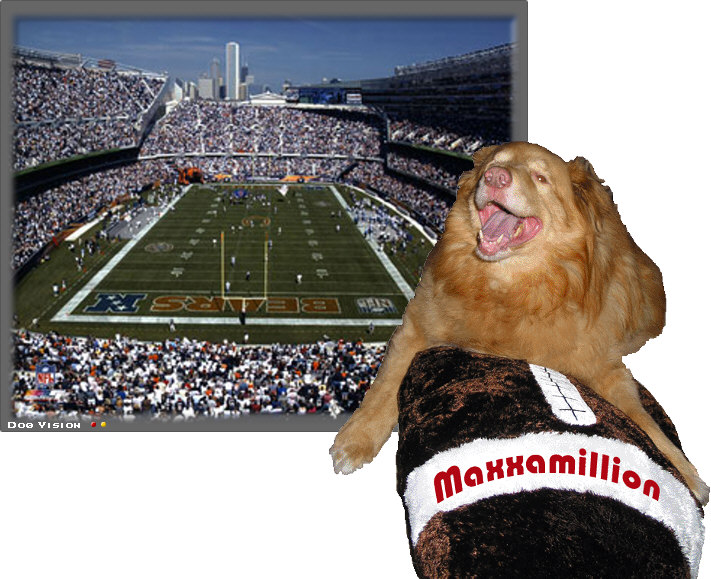
Hello every one today I'm 11 years old or 77 in dog years! I got this football pillow as one of my gifts. So I could watch Da Bears play.

Today is Maxxamillions 11'th birthday. It seems like yesterday that this beautiful loving puppy boy came into our lives. We can't imagine him not being in our lives and around the house. Maxxamillion's surgery a few months ago was a lesson on how to really appreciate your loved ones every moment, for tomorrow is not promised us! Today Maxxamillion was spoiled like always, we made him a special batch of his favorite low-cal oatmeal dog bisquits that we make for him. He got gifts and cards from friends and family. We got him a football shaped pillow and some stuffed toys. He loves the pillow a lot, as for the stuffed animals he did what he does to all stuffed animal toys, pull off the eyes. He continues to recooperate each day and we are very grateful to have him with us today. Happy Birthday Maxxamillion!!!! and many many more.
Love Mom & Pop.

Thursday, October 19, 2006


Here is Maxxamamillion at six weeks old and six and a half pounds. The beginning of the our little Pawmaster in 1995.
Maxxamillion Loves Bears
I am happy to say Maxxamillion is doing much better each day. He is still a little stiff on his his hind legs from his arthritis but continues to inprove daily
He continues to get some rehab and short walks around our neighborhood daily. On Saturday he finally went back to his favorite park (Portage Park) which he went to daily for ten years.
We could see the joy in his face and tail wagging high when we pulled up to Portage Park. He got up from his seat with out any hesitation at all. And when we opened the truck door, out came Maxxamillion down his ramp and ready to walk his park again. Oh what happiness we felt to see him in the park again. He marked every spot he could until he had no more. His running days are over but we are so happy he is able to walk around fine. So far he has survived the surgery and the removal of a six pound tumor. We are blessed to have such a wonderful puppy boy. We love You Maxxamillion, Mom & Pop

Tuesday, September 26, 2006


Today was Maxxamillion's last follow-up for his surgery. He got a clean bill of health as far as the surgery goes. We will monitor him for chances of a reoccurrence of the tumor. He will still be in recooperation for a while longer so his right leg could regain more strength. The picture above is in the back yard after we got back from his Vet appointment today. Maxxamillion has been I survivor since he was an 8 week old puppy. At the age of four a Vet told us he would not survive to be eight. He will be eleven on October 23, God willing. Making the decision to have the surgery was a very hard but well researched decision for us. We could not stand the fact that he was very uncomfortable with the tumor and that it was hampering his ability to climb stairs and getting in and out of the family car (really his). We are very fortunate to have a great Vet in doctor Michael, who has taken care of Maxxamillion for over five years now. Maxxamillion is a family member and putting him down was never an option for us. We will be posting more on the decisions we faced through the whole surgery ordeal.

Monday, September 25, 2006

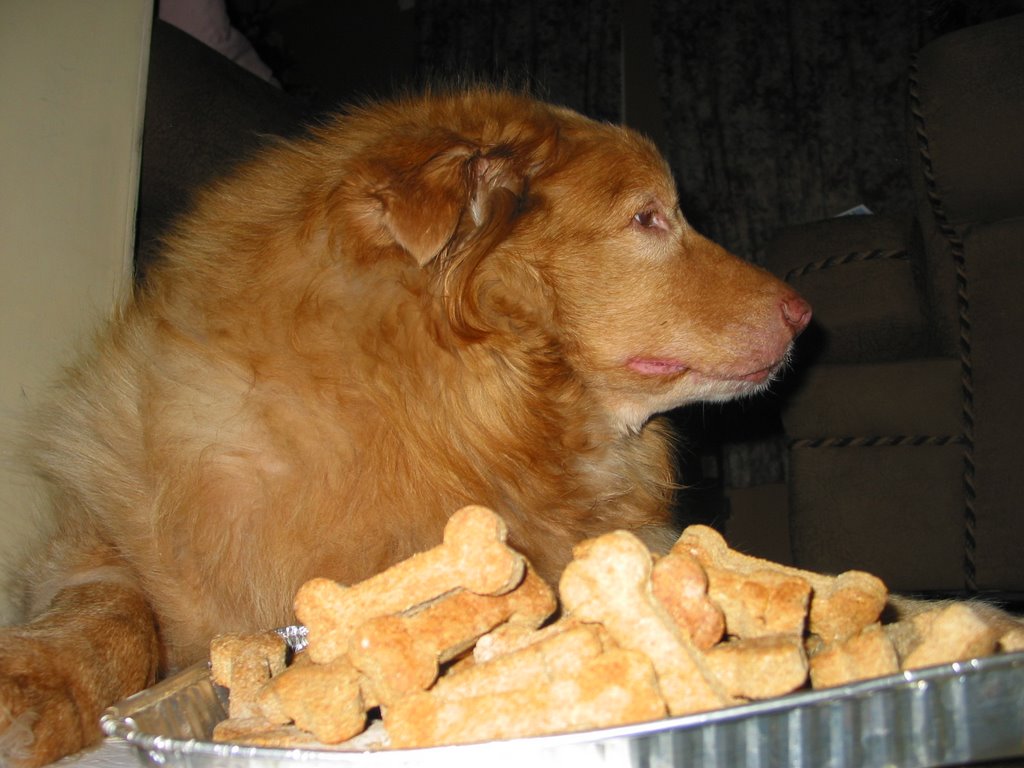
Maxxamillion is feeling much better and is very close to feeling normal. We're so happy that he can go up and down the stairs without hesitation. Also, for the first time since his surgery, he did his favorite flip upside down on his back barking with joy - which he had always done at least once a day when he'd go outside. As you can see the in the picture, we made Maxx his favorite home made oatmeal dog biscuits, which he enjoys very much.

Monday, September 04, 2006


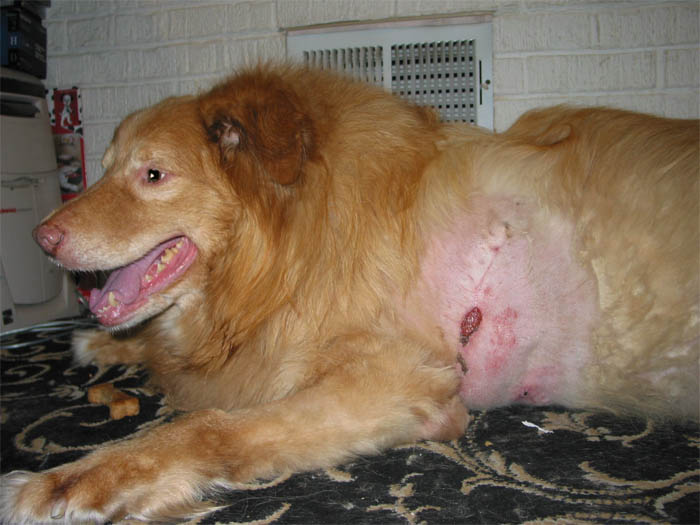
We want to thank Dr. Fredyniak (Maxxamillion's vet) and his staff at Mayfair Animal Hospital in Chicago. We appreciate his great work, love of animals, and dedication to Maxx's care over the past eight years. Maxx's wound continues to improve with daily applications of Betadine compresses and the help of two types of antibiotics. We feel relief at how well he's been recovering from his surgery.